


1821: Heritage
The Faïencerie de Gien was created in 1821 in Gien in the Loire Valley, in the heart of France.
The 19th century saw the rise of numerous production sites, heirs to the ceramists of past centuries. Its two-hundred-year history is linked to the name of its founder, the Englishman Thomas Hall. Hall settled in Gien and purchased the grounds and buildings of the Minims convent located on the banks of the Loire.
At that time, the town of Gien had several advantages: it was an important commercial crossroads, the town was full of raw materials (clays, sands, siliceous pebbles from the Loire) and above all the Loire allowed the transport of wood from the forests of Orléans for the baking kilns.

1821-1850: THE FIRST STEPS
These years saw the emergence of white earthenware with octagonal shapes and sophisticated modeling, evoking the precision and brilliance of goldsmith work. This period is also distinguished by the appearance of the first themed plates, which reflect the refined taste and cultural richness of their time, already affirming the uniqueness and excellence of the Manufacture.

1850-1914: The Golden Age
At the end of the 19th century, the Faïencerie de Gien asserted its creative boldness.
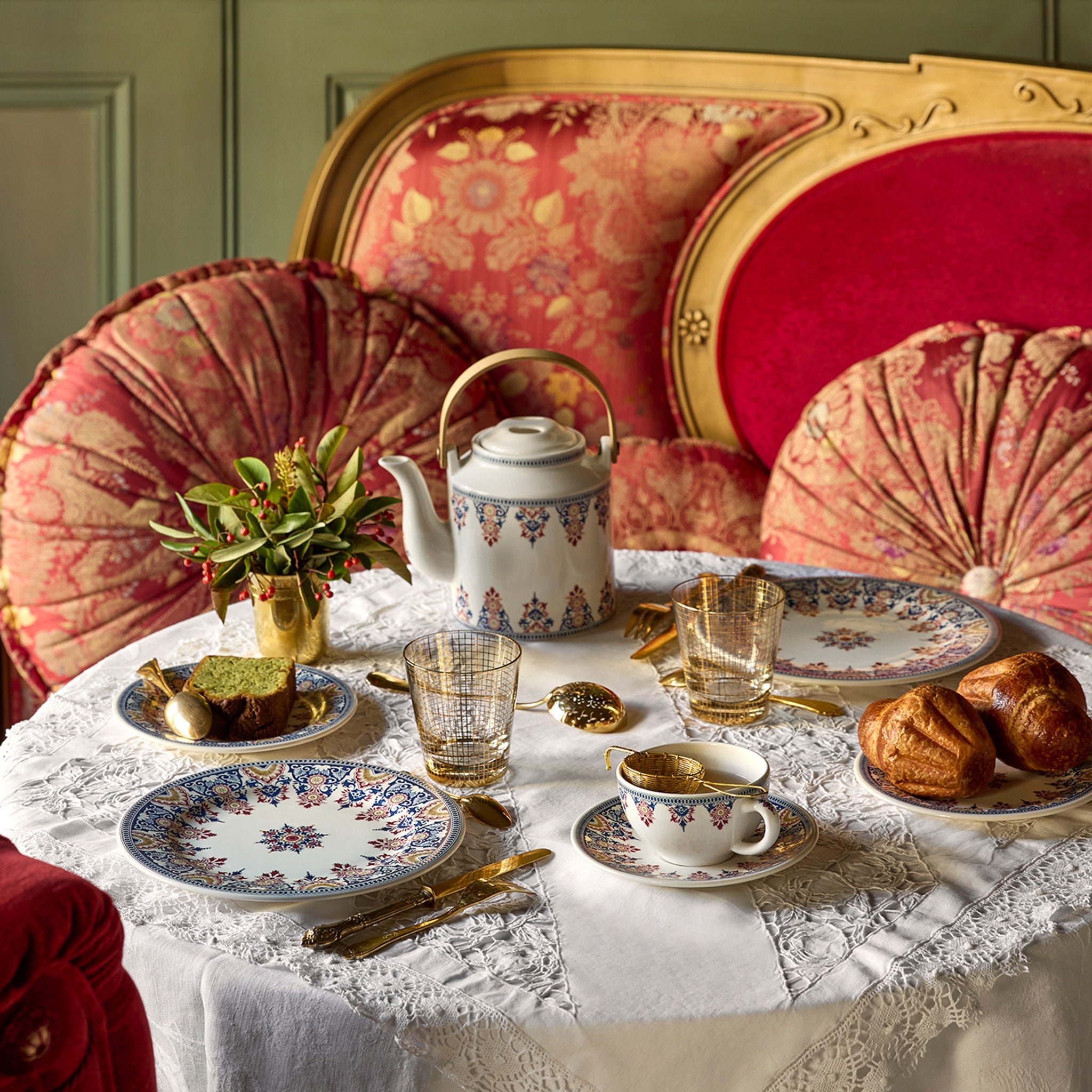
Drawing inspiration from great traditions – from Rouen to Marseille, from the Renaissance to the Ottoman Empire – the Manufacture enriches its repertoire with exceptional decorative pieces and tableware.
Collaborations with artists and engravers, technical and artistic innovations earned it prestigious awards at World's Fairs. Gien then continued its rise, offering the great families of Europe personalized creations, a symbol of a refined art of living.

1918-1984: The Interlude
The first half of the 20th century saw significant social, economic, and political upheaval. The factory sought to maintain its established position and avoid succumbing to the turmoil of the era.
From 1945 onwards, a new world order was established. In the decades that followed, Gien continued to modernize its production facilities by building tunnel kilns (the largest in Europe) and by purchasing new machines.
In the 1970s, the Gien pottery factory faced stiff competition from Italy and Portugal. Europe was flooded with low-quality products.
Still dynamic, the factory is increasing its tile production. The partnership with the Harmonic group allows Gien to participate in major architectural projects through the decoration of residential complexes.
From 1980 onwards, the factory suffered from a decline in activity which forced it to restructure.

1984-2014: The Second Wind
In 1984, the Faïencerie de Gien experienced a revival.
It offers a new range of products (hand-painted, numbered limited edition pieces), a museum is created.
Famous names are associated with Gien: Paco Rabanne, Garouste and Bonetti, Andrée Putman, Patrick Jouin, Isabelle de Borchgrave… to design new products and enhance the earthenware.

Since 2014: the rebound
Since 2014, Yves de Talhouët has been taking over the Faïencerie de Gien.
Two passionate men, convinced by the exceptional heritage, the excellence of the know-how and the reputation of the Faïencerie de Gien, decided to perpetuate the tradition and explore new avenues by promoting contemporary creation and implementing a new export distribution policy.
In 2025, Pascal Cagni takes over the faïencerie de Gien continuing its history while opening a new chapter for this iconic house of French ceramic heritage.
Today, more than ever, the Faïencerie de Gien is committed to a program of excellence. A member of the prestigious Comité Colbert, which brings together major French luxury brands, it has been awarded the Entreprise du Patrimoine Vivant (Living Heritage Company) label.
The women and men of the Manufacture are resolutely focused on the future to reinvent the fine earthenware of tomorrow while relying on its two-hundred-year-old roots.
Iconic relief of the Pont aux Choux
The Pont aux Choux pattern refers to the eponymous factory established in 1748 in Paris. It was built on Boulevard Saint-Antoine (now Boulevard Beaumarchais) on former moats that had been converted into market gardens, where cabbages were grown to feed the Parisian population. Access to these fields was via a bridge, hence the name Pont-aux-Choux (Cabbage Bridge). In 1819, Thomas Hall, founder of the Faïencerie de Gien, acquired Pont-aux-Choux and revived the famous "rice grain" pattern, which it had created in the 18th century.
The fineness of the paste allows for the creation of iconic pieces with extremely fine reliefs: swirling volutes and gadroons, lid knobs shaped like artichokes and the famous pattern of scattered grains of rice.
An iconic color
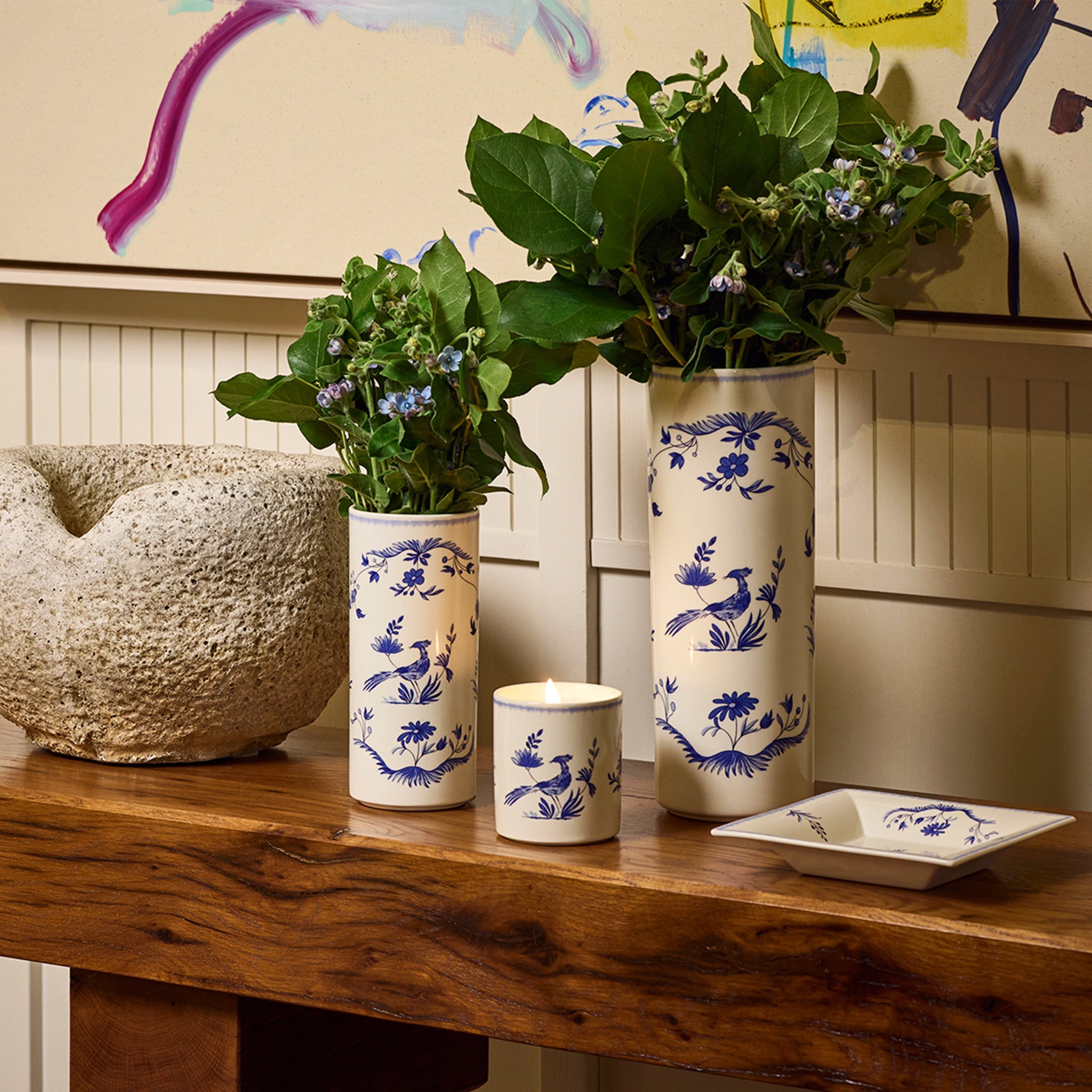
It was in 1872 that the name of the Faïencerie became associated with a color: blue. At that time, most potters and porcelain makers dipped their brushes in this azure hue, as illustrated by the blues of Sèvres or Nevers in France, or Delft in the Netherlands. The Gien color is attributed to the Blois-based ceramist Adrien Thibault (1844-1918), who developed it for his "Blue Renaissance" decor, inspired by 15th-century Italy.
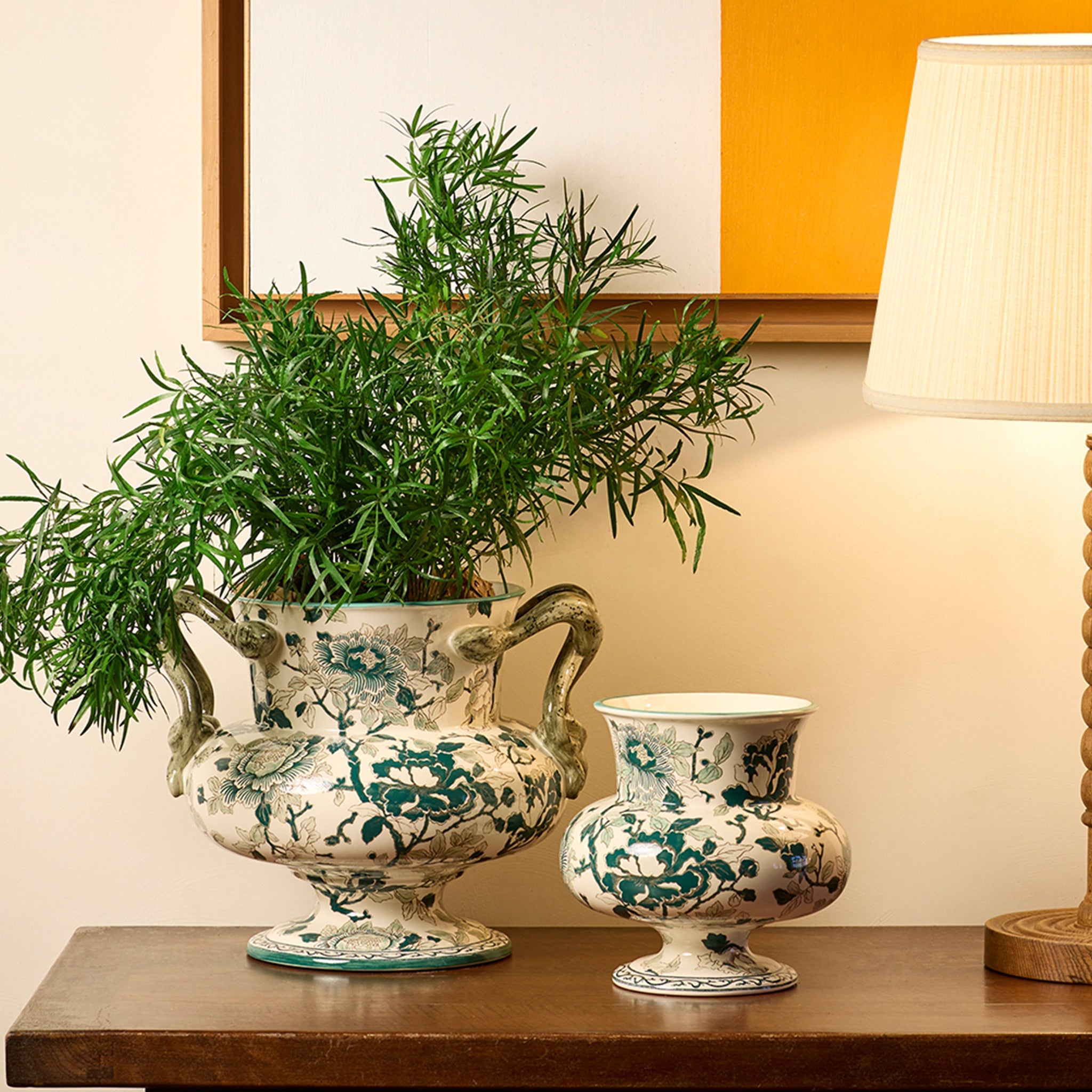
Gien blue, or Renaissance blue, can be found in contemporary creations. In 2015, the Blue Peonies vase appeared, a monochrome version of the famous 1875 Peonies pattern with its opulent multicolored flowers. In 2016, the Indigo collection was released: ceramicist Brigitte de Bazelaire reinterpreted the Rouen 32 dinner service she used as a child. In 2023, designer Jean-Charles de Castelbajac explored Gien blue with the L'Archipel Sentimental pattern, the idea being to create bridges between past and present by blending this contemporary design with historical Gien patterns, such as Blue Peonies, Blue Nets, and Mismatched Blue.


